Generally social media is over consumed and results in addiction as well as health issues, such as anxiety, depression, low self-esteem, self-absorption, fear of missing out and more. Social media is transforming societies for the worse as generations are built on deceit.
The current business models run on ads, selling user data and manipulating users to spend more time on their platform, so they can market more products.
Users feel like they’re wasting their time on social media and don’t consider the interactions to be meaningful anymore but on the flip side users still feel addicted and have the need to connect with people.
It’s extremely relevant to build a new meaningful app, which was the main goal of this design sprint. Find a way to help people make meaningful interactions online with their personal network in a healthy way and expand personal bubble as well as connect with others which have shared interests.
PROBLEM
Generally social media is overconsumed and results in addiction as well as health issues, such as anxiety, depression, low self-esteem, self-absorption, fear of missing out and more. Social media is transforming societies for the worse, as generations are built on deceit.
The current business models run on ads, selling user data and manipulating users to spend more time on their platform, so they can market more products.
Users feel like they’re wasting their time on social media and don’t consider the interactions to be meaningful anymore, but on the flip side users still feel addicted and have the need to connect with people.
It’s extremely relevant to build a new meaningful app, which was the main goal of this design sprint. Find a way to help people make meaningful interactions online with their personal network in a healthy way and expand personal bubble as well as connect with others which have shared interests.
GOAL
Create an innovative social media business model that drives conscious engagement focused on mental health and improved social experiences.
GOAL
Create an innovative social media business model that drives conscious engagement focused on mental health and improved social experiences.
TEAM
I and 5 fellow UX Design students from the Career Foundry program.
TOOLS
Miro – Zoom – Skype – Slack – Google Forms – Google Docs – Figma
TIMELINE
6-day Design Sprint. An average of 8 to 12-hour days.
TEAM
I and 5 fellow UX Design students from the Career Foundry program.
TOOLS
Miro – Zoom – Skype – Slack – Google Forms – Google Docs – Figma
TIMELINE
6-day Design Sprint. An average of 8 to 12-hour days.
USER RESEARCH
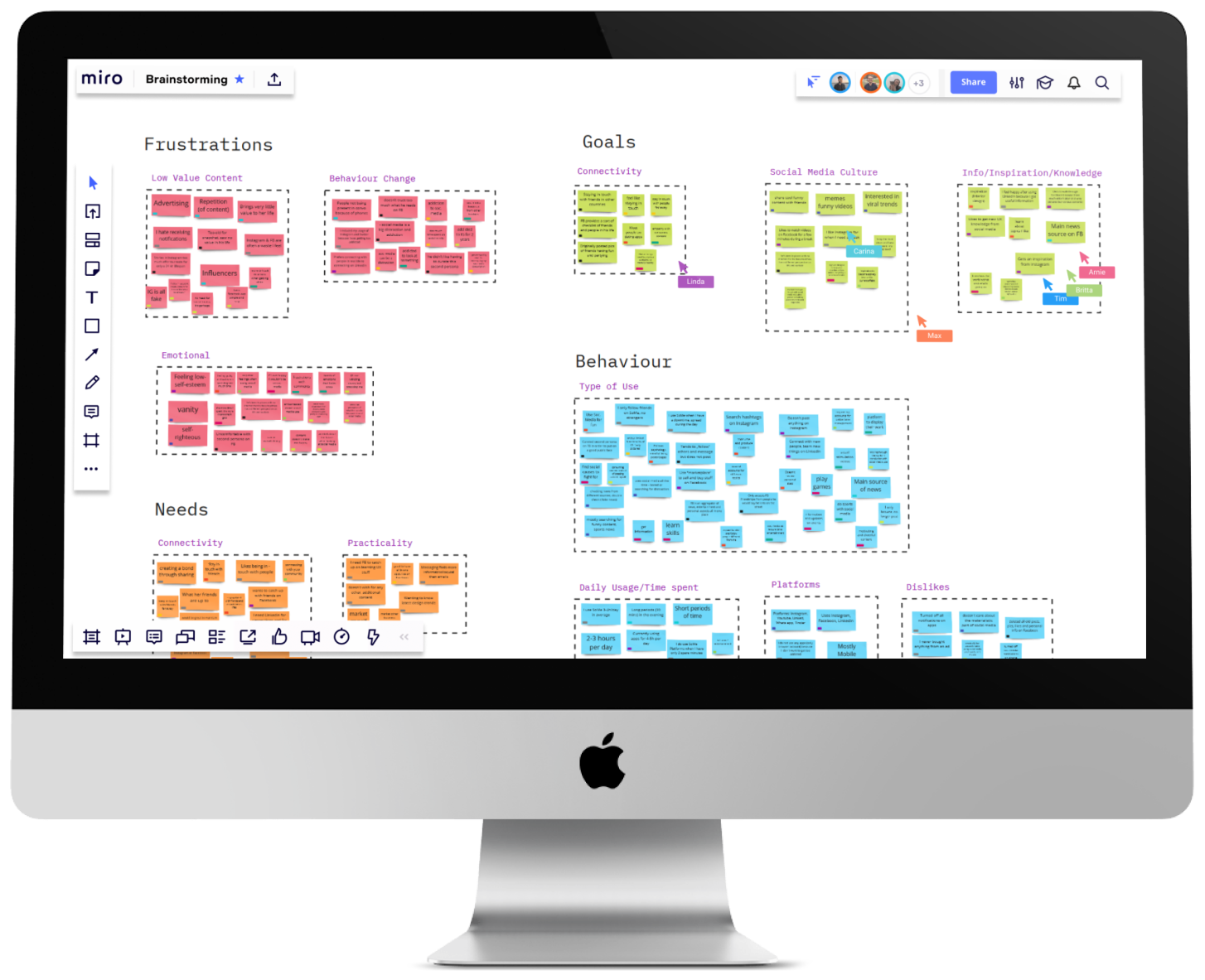
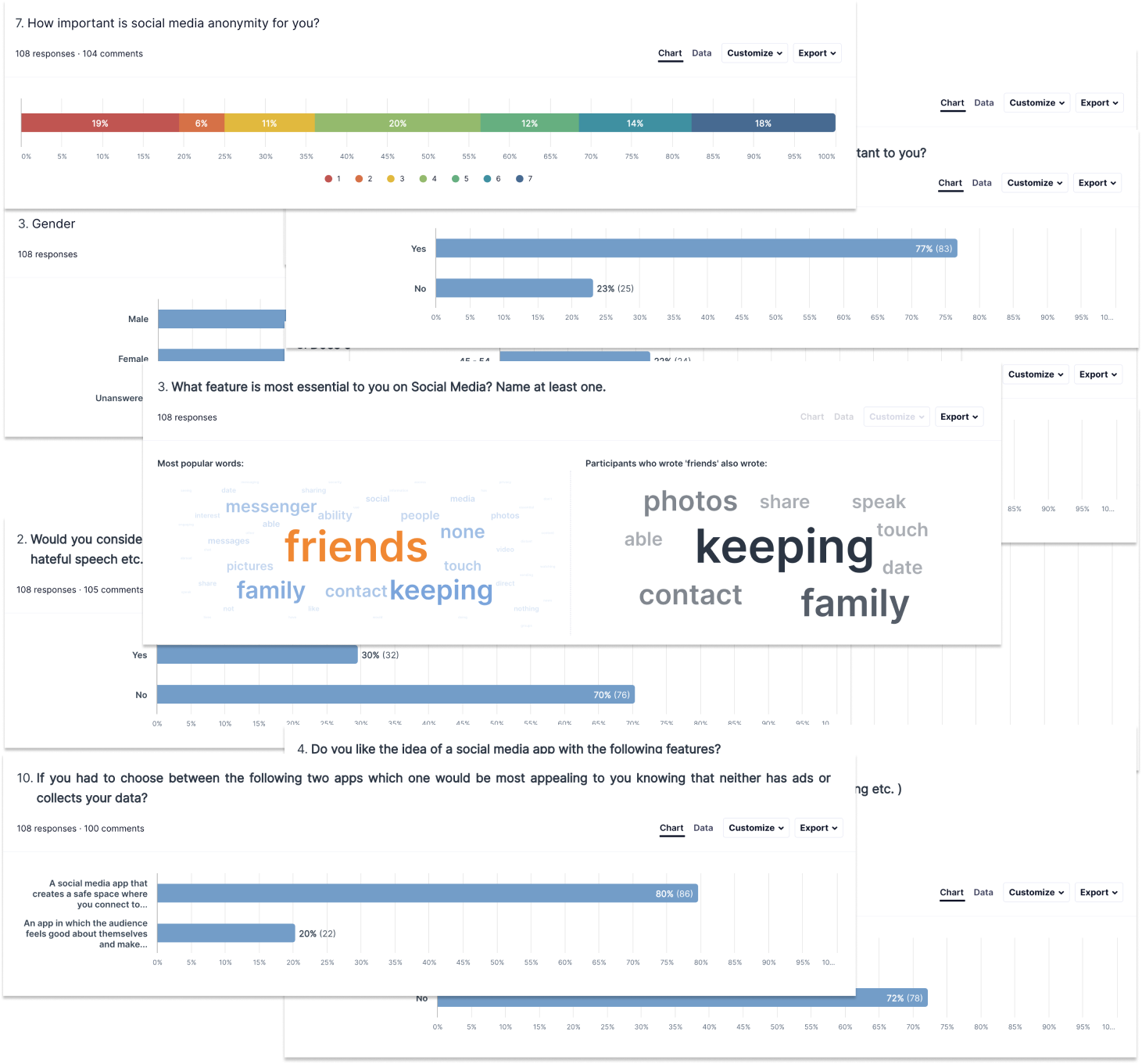
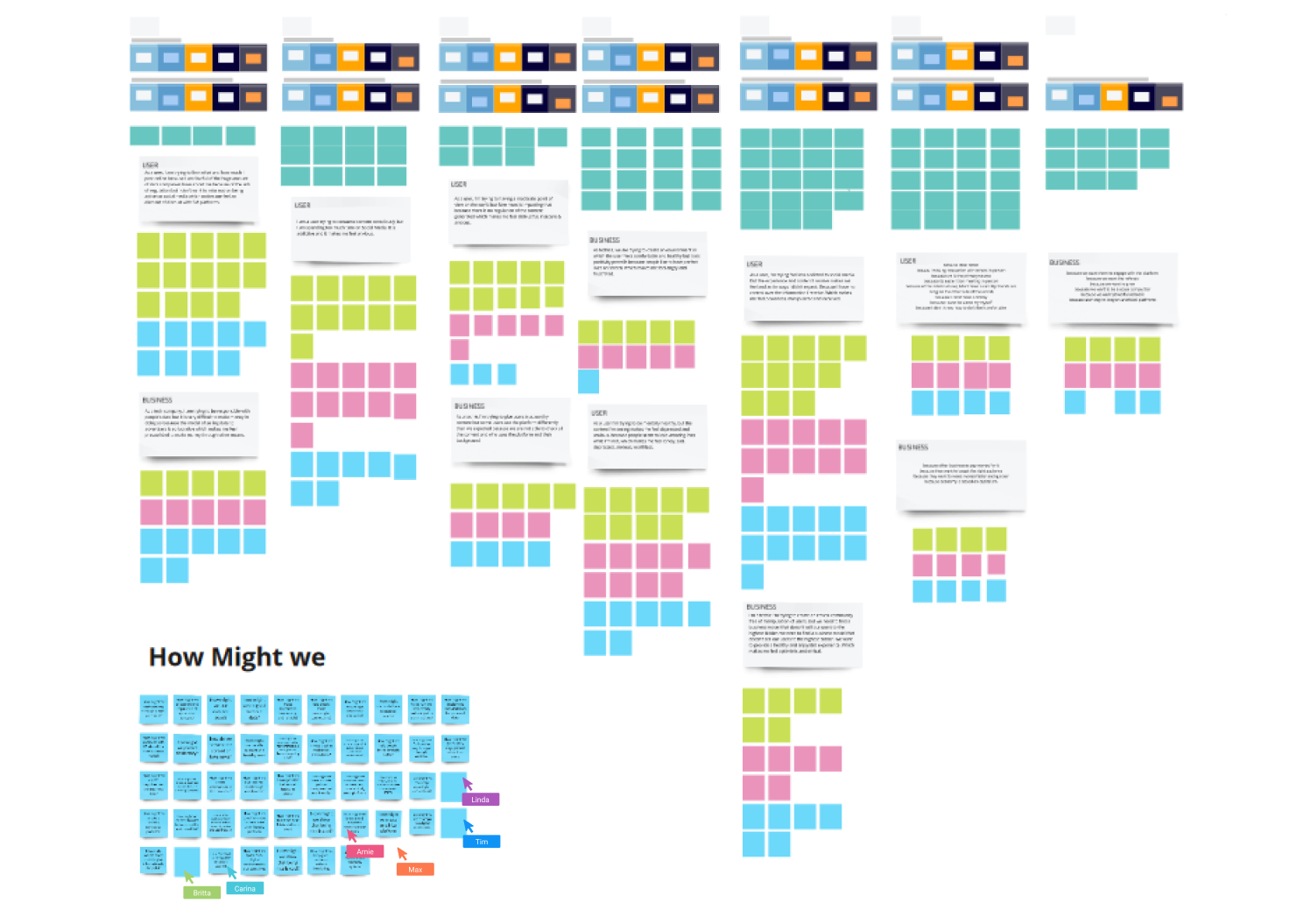
We each interviewed 1-3 social media users and gathered valuable feedback. In order to also receive quantitative user research, we created a survey with 10 questions from which we received 108 answers. We also had priceless insights from the Netflix documentary “The Social Dilemma”. After we extracted all the answers, we clustered them into different categories.
USER RESEARCH
We each interviewed 1-3 social media users and gathered valuable feedback. In order to also receive quantitative user research, we created a survey with 10 questions, from which we received 108 answers. We also had priceless insights from the Netflix documentary “The Social Dilemma”. After we extracted all the answers, we clustered them into different categories.
INTERVIEW CLUSTERING
INTERVIEW CLUSTERING
SURVEY RESULTS
SURVEY RESULTS
USER PERSONAS & EMPATHY MAPS
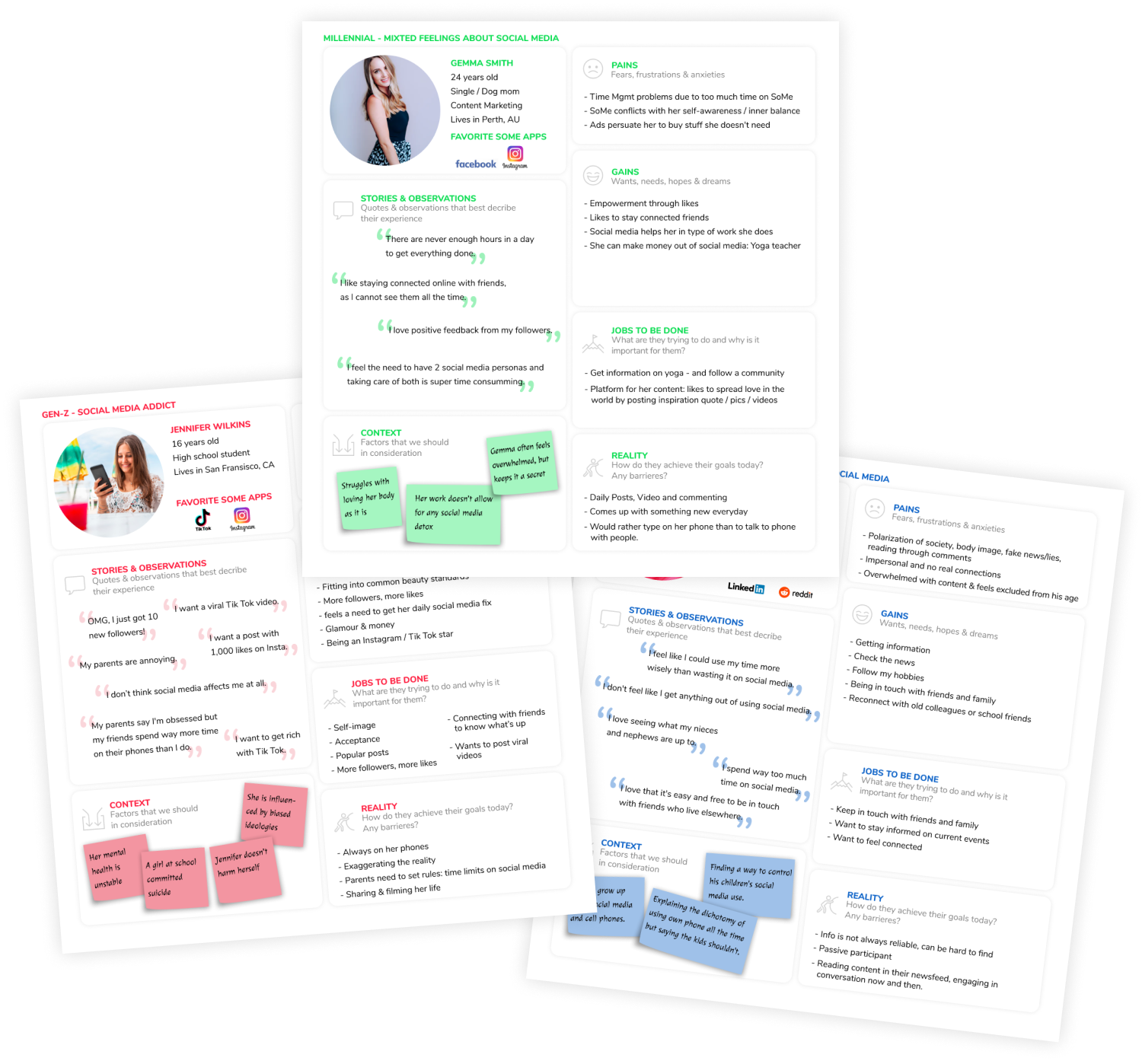
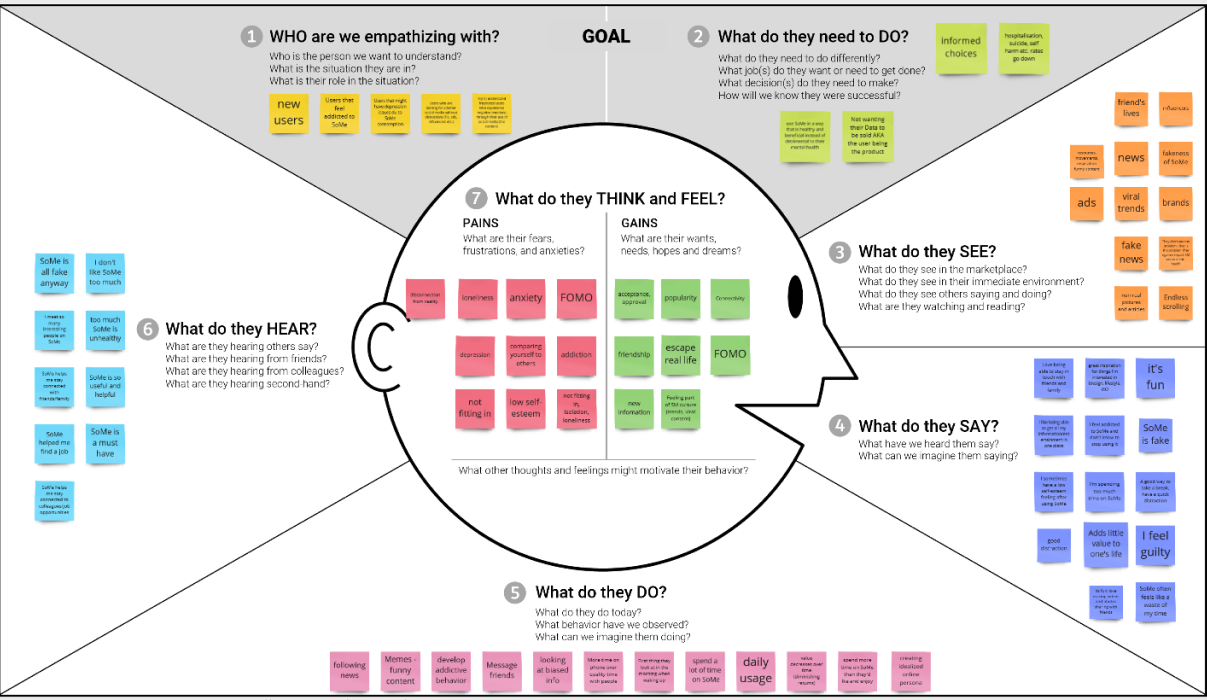
To understand and connect even more with our typical social media users, we developed 3 personas and an empathy map.
USER PERSONAS & EMPATHY MAPS
To understand and connect even more with our typical social media users, we developed 3 personas and an empathy map.
USER PERSONAS
USER PERSONAS
EMPATHY MAP
EMPATHY MAP
PRIORITIZING NEED STATEMENTS
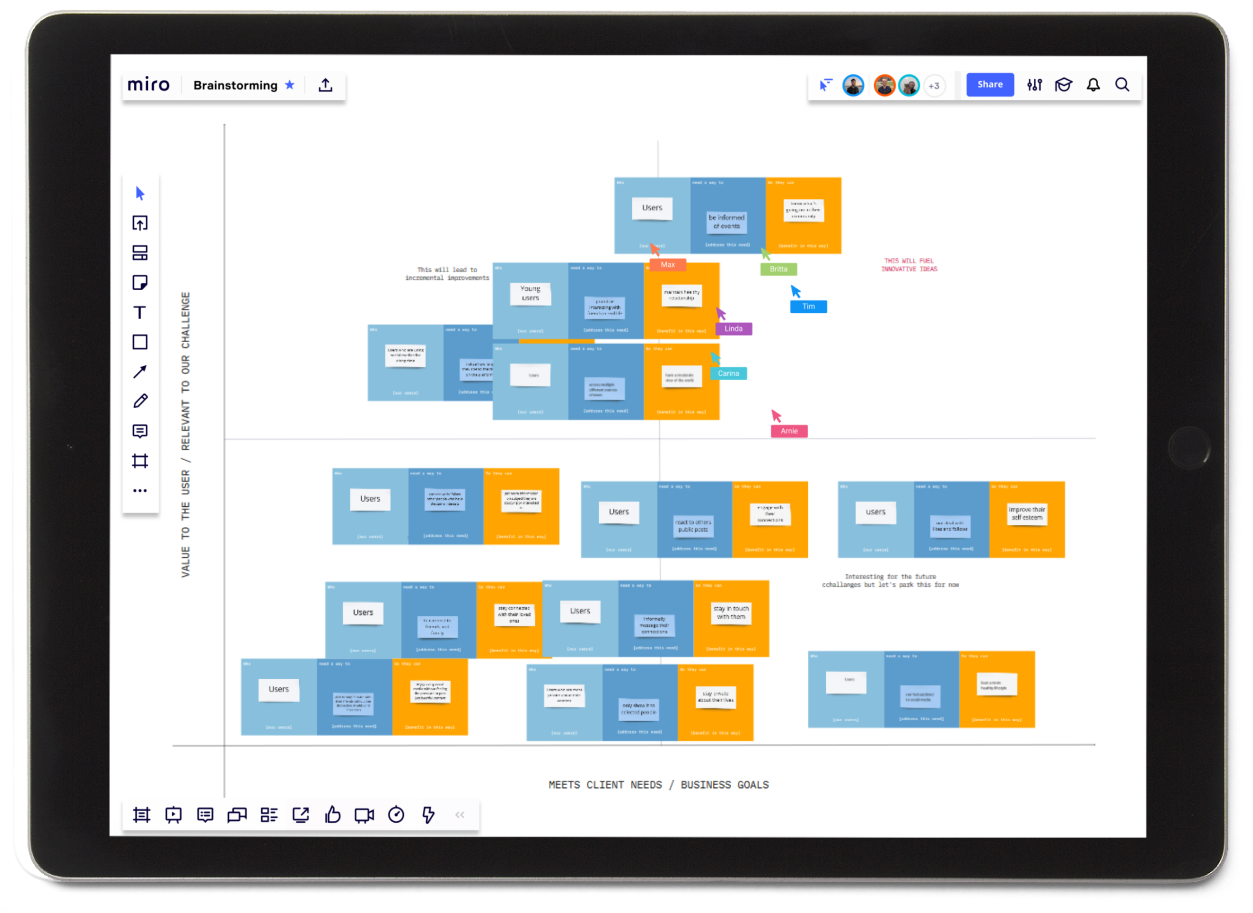
Our users and the business side both have many needs, so we made a long list of user stories. Prioritizing them was the next step: on the below matrix, we placed the most valuable need statements, which we voted on, to see what brought the most value to the users and met best the clients / business goals. This was important in order to see in which direction our app would develop.
PRIORITIZING NEED STATEMENTS
Our users and the business side both have many needs, so we made a long list of user stories. Prioritizing them was the next step: on the below matrix, we placed the most valuable need statements, which we voted on, to see what brought the most value to the users and met best the clients / business goals. This was important in order to see in which direction our app would develop.
UNDERSTANDING THE PROBLEM AND BRAINSTORMING SOLUTIONS
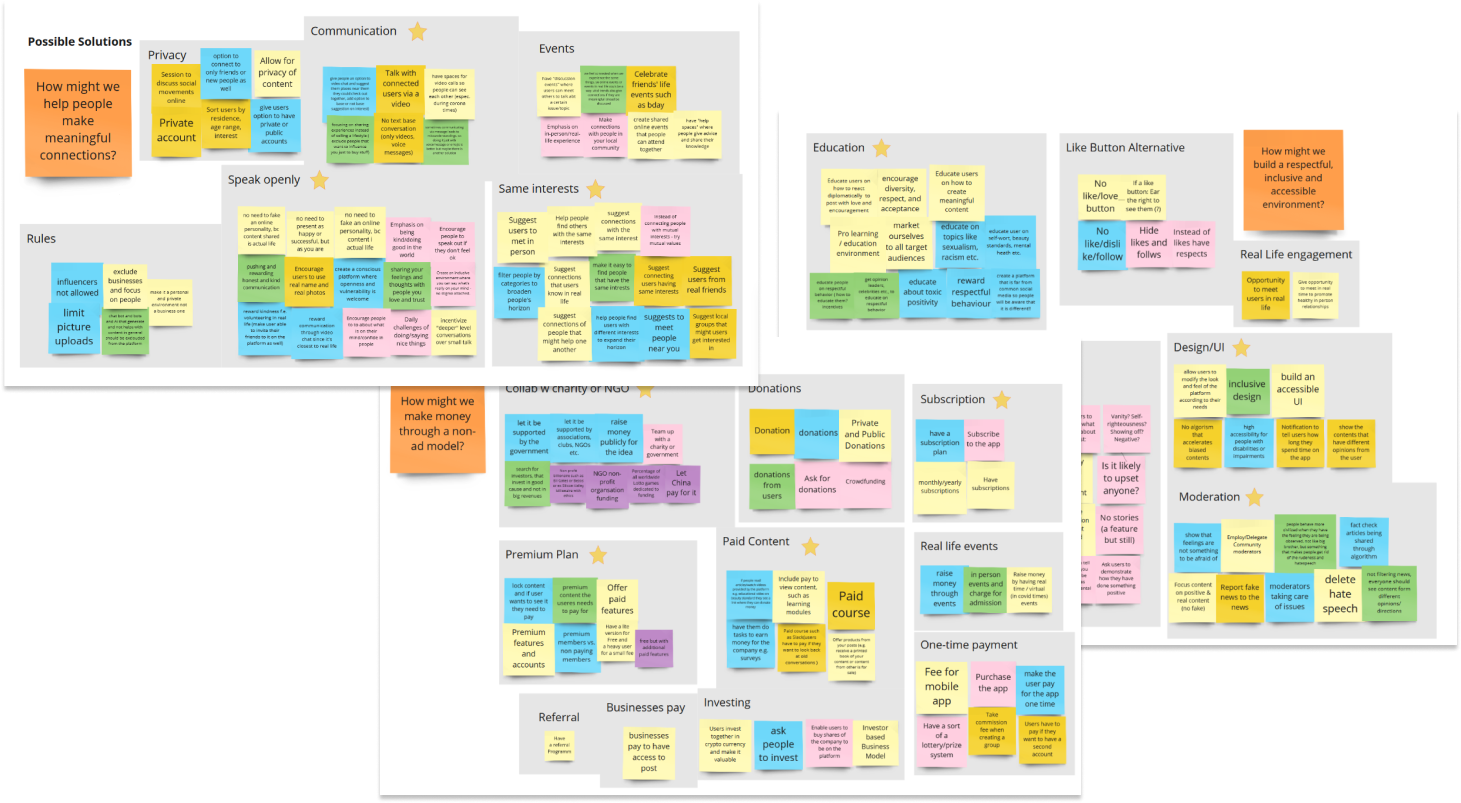
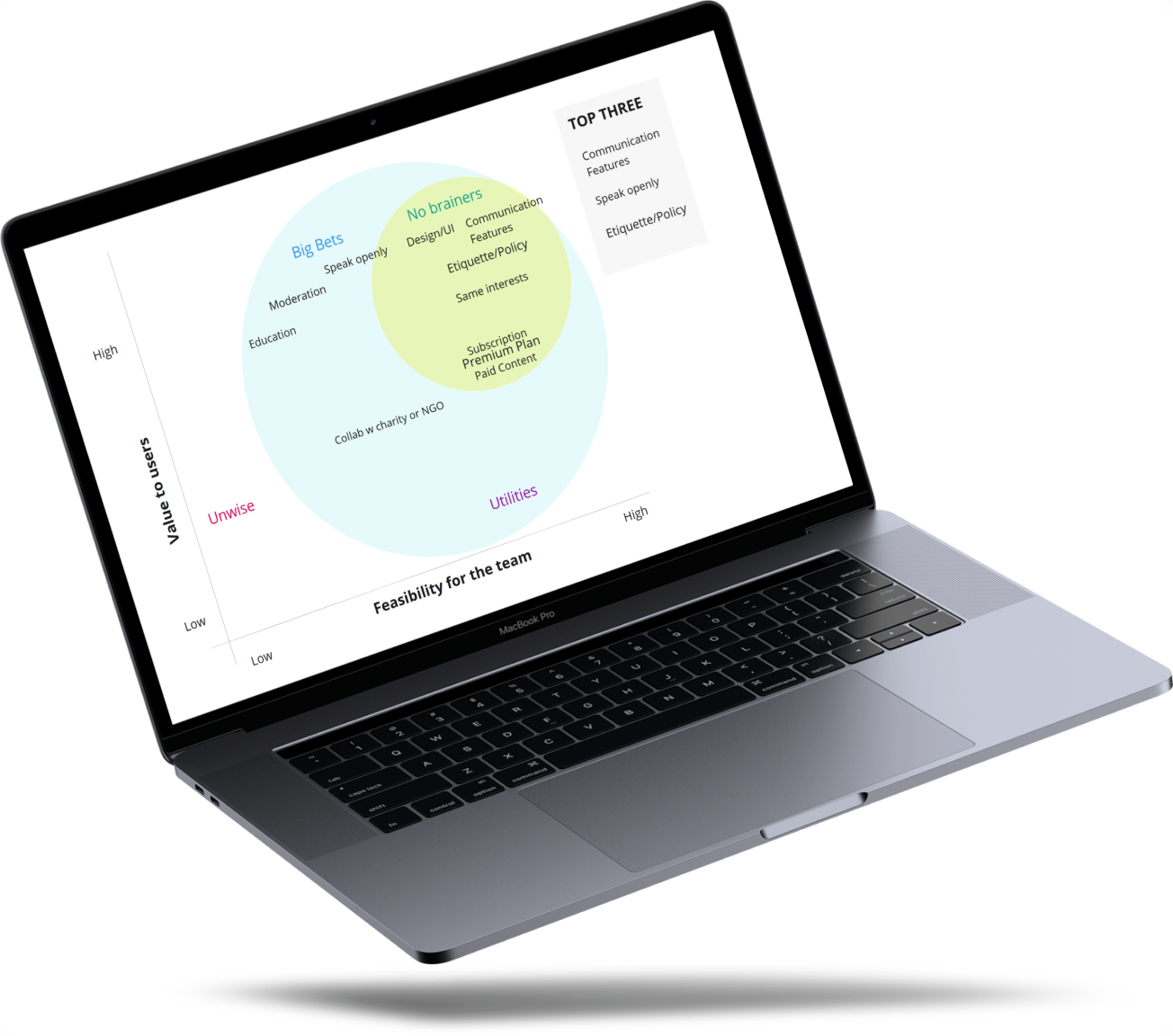
In order to find a great solution, we needed to properly understand all the problems from different point of views. We extracted all the problems from the businesses as well as the ones from the users which we found during our research and digged dip, into the core of the situation, asking 5 times “why”. Taking the negative of the problem, turning it into something positive and from those statements, we created meaningful “How Might We” questions. The most important “HMW” were prioritized into the same type of matrix as the step above. Then it was time to brainstorm some solutions which we clustered into features and once again prioritized between “unwise, “big bets” and “no-brainer”.
UNDERSTANDING THE PROBLEM AND BRAINSTORMING SOLUTIONS
In order to find a great solution, we needed to properly understand all the problems from different point of views. We extracted all the problems from the businesses as well as the ones from the users which we found during our research and digged dip, into the core of the situation, asking 5 times “why”. Taking the negative of the problem, turning it into something positive and from those statements, we created meaningful “How Might We” questions. The most important “HMW” were prioritized into the same type of matrix as the step above. Then it was time to brainstorm some solutions which we clustered into features and once again prioritized between “unwise, “big bets” and “no-brainer”.
HMW
HMW
GENERATING SOLUTIONS FOR HMW
GENERATING SOLUTIONS
FOR HMW
PRIORITIZING THE HMW
PRIORITIZING THE HMW
COMING UP WITH SOLUTIONS
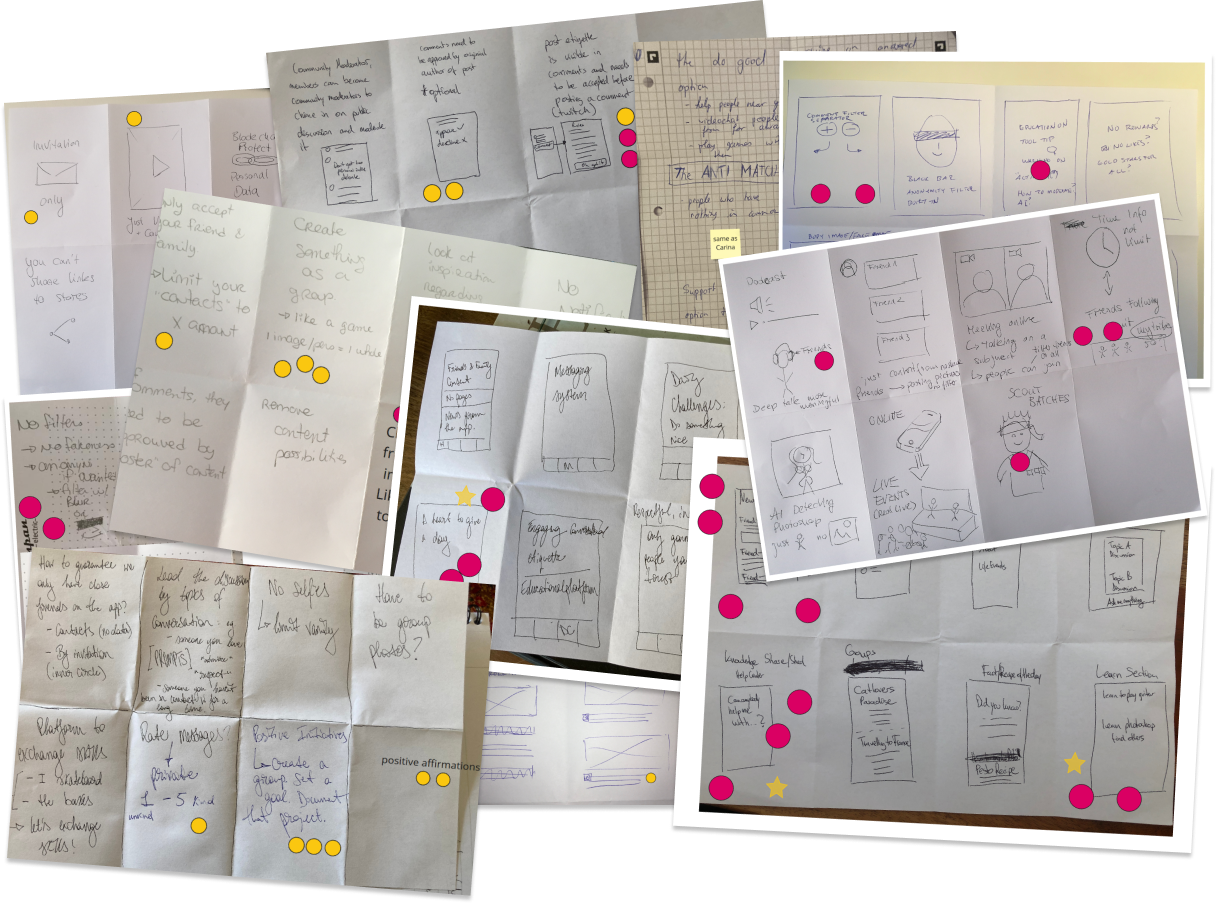
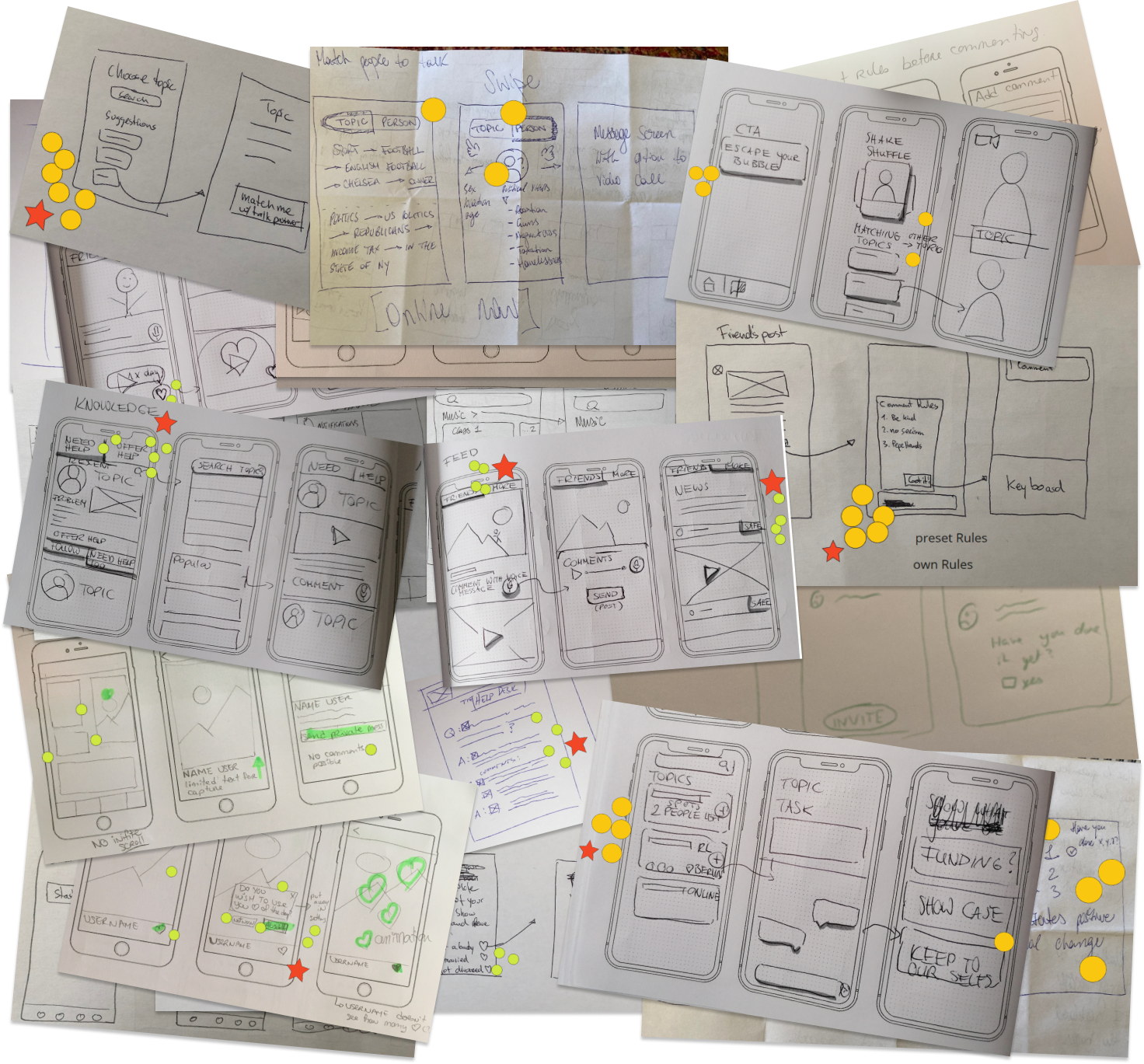
We then took the top 3 features: communication, speak openly as well as etiquette/policy and started sketching ideas with the “Crazy 8s” method. We voted on the best ideas and continued by sketching screens for each popular element. We did this procedure twice, starting again with the “Crazy 8s”.
COMING UP WITH SOLUTIONS
We then took the top 3 features: communication, speak openly as well as etiquette/policy and started sketching ideas with the “Crazy 8s” method. We voted on the best ideas and continued by sketching screens for each popular element. We did this procedure twice, starting again with the “Crazy 8s”.
CRAZY 8s
CRAZY 8s
SCREEN SKETCHING
SCREEN SKETCHING
SKETCHING WIREFLOWS
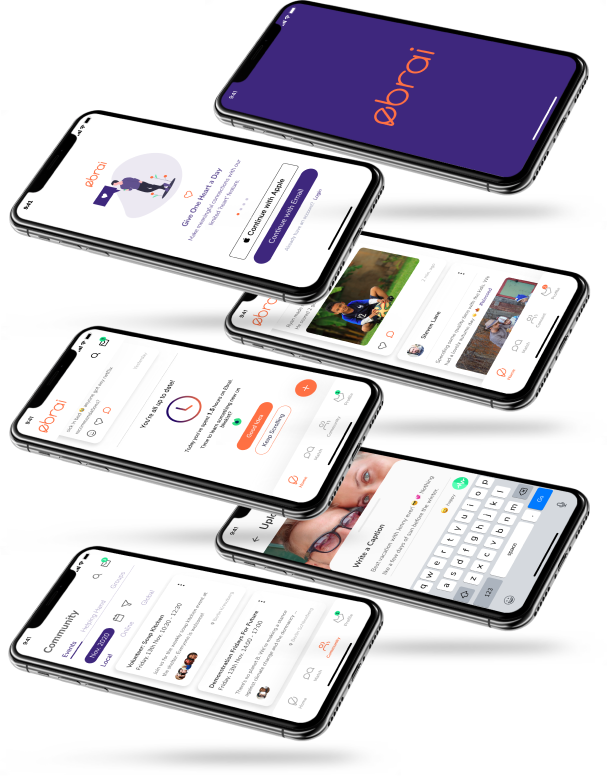
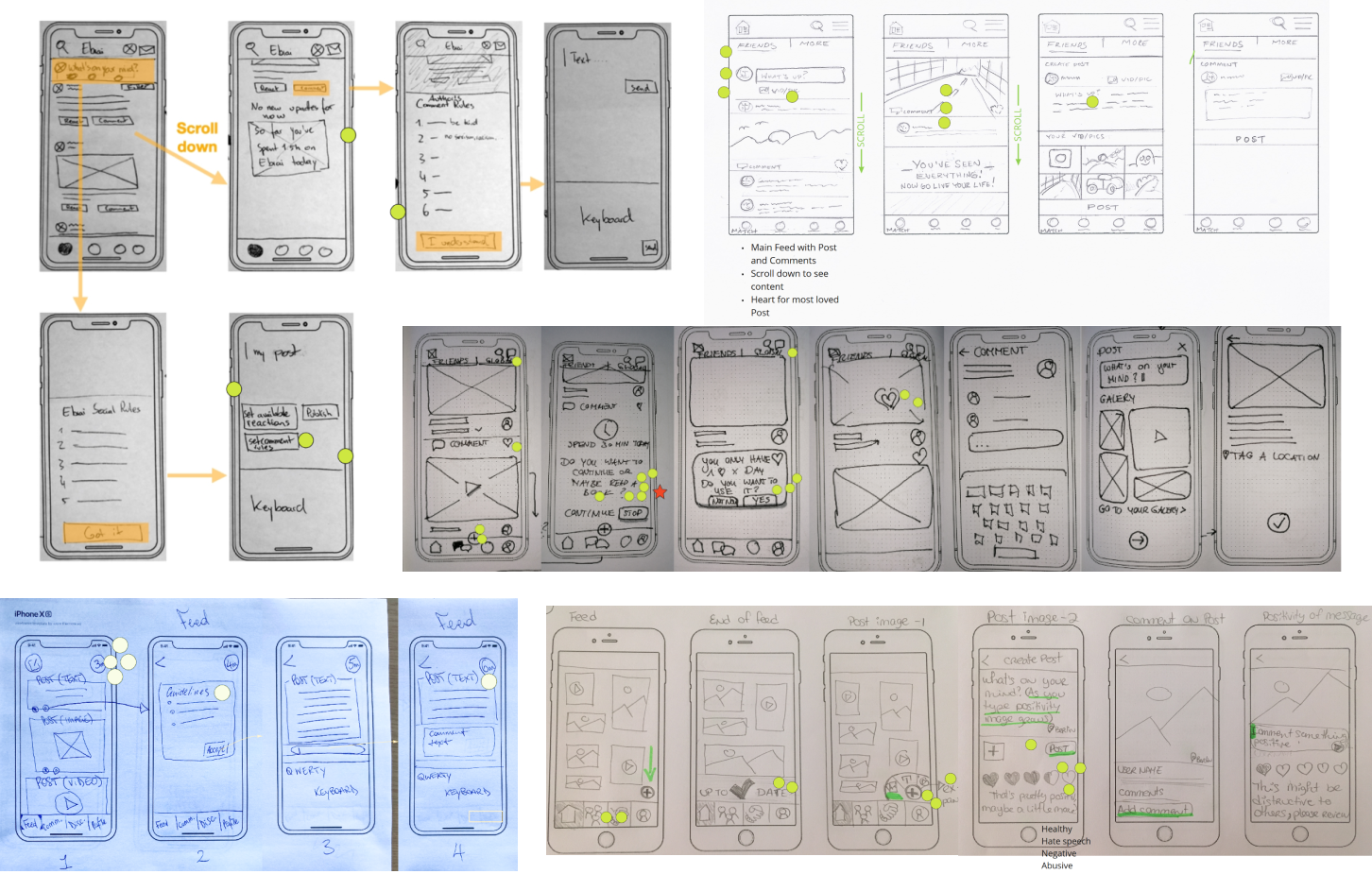
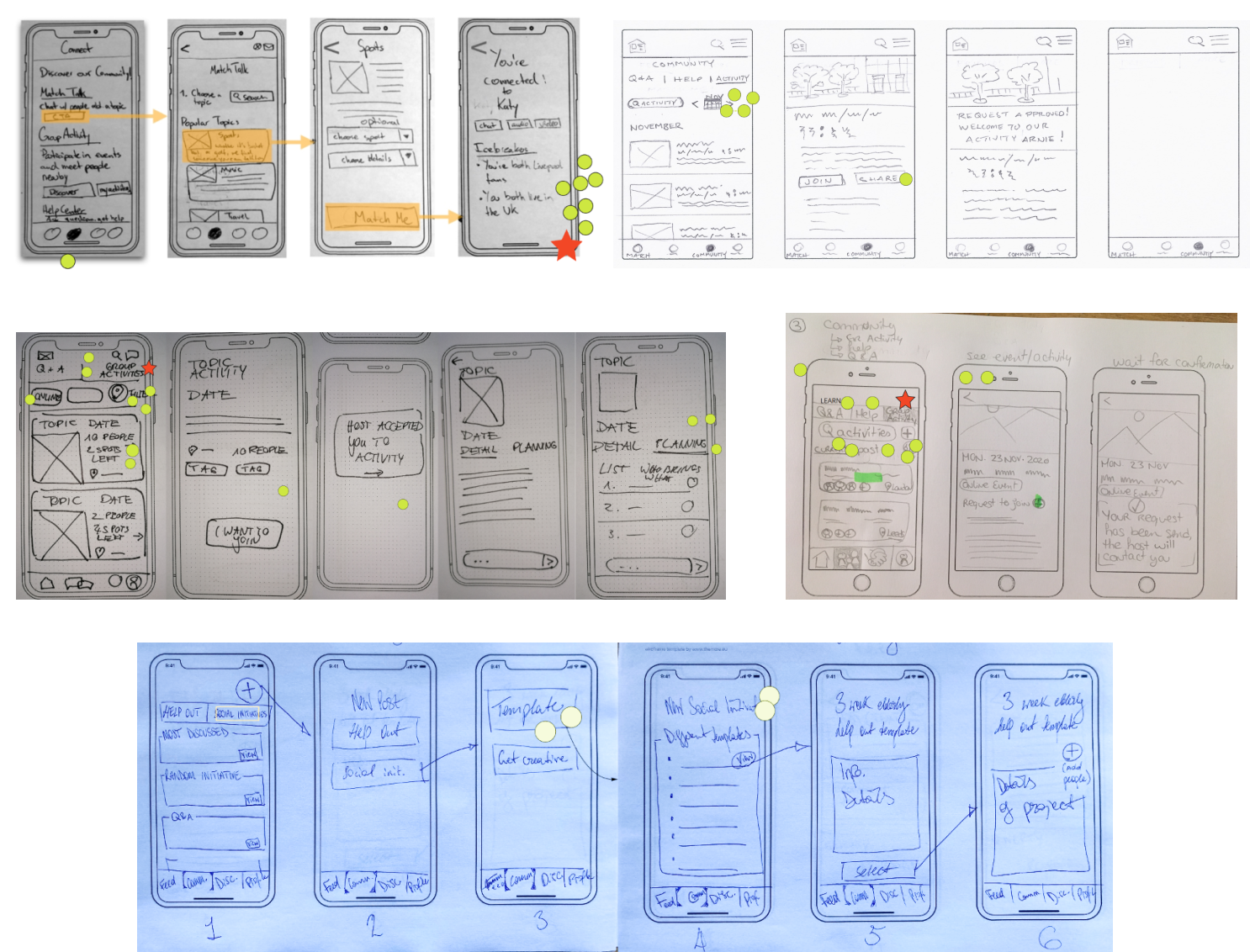
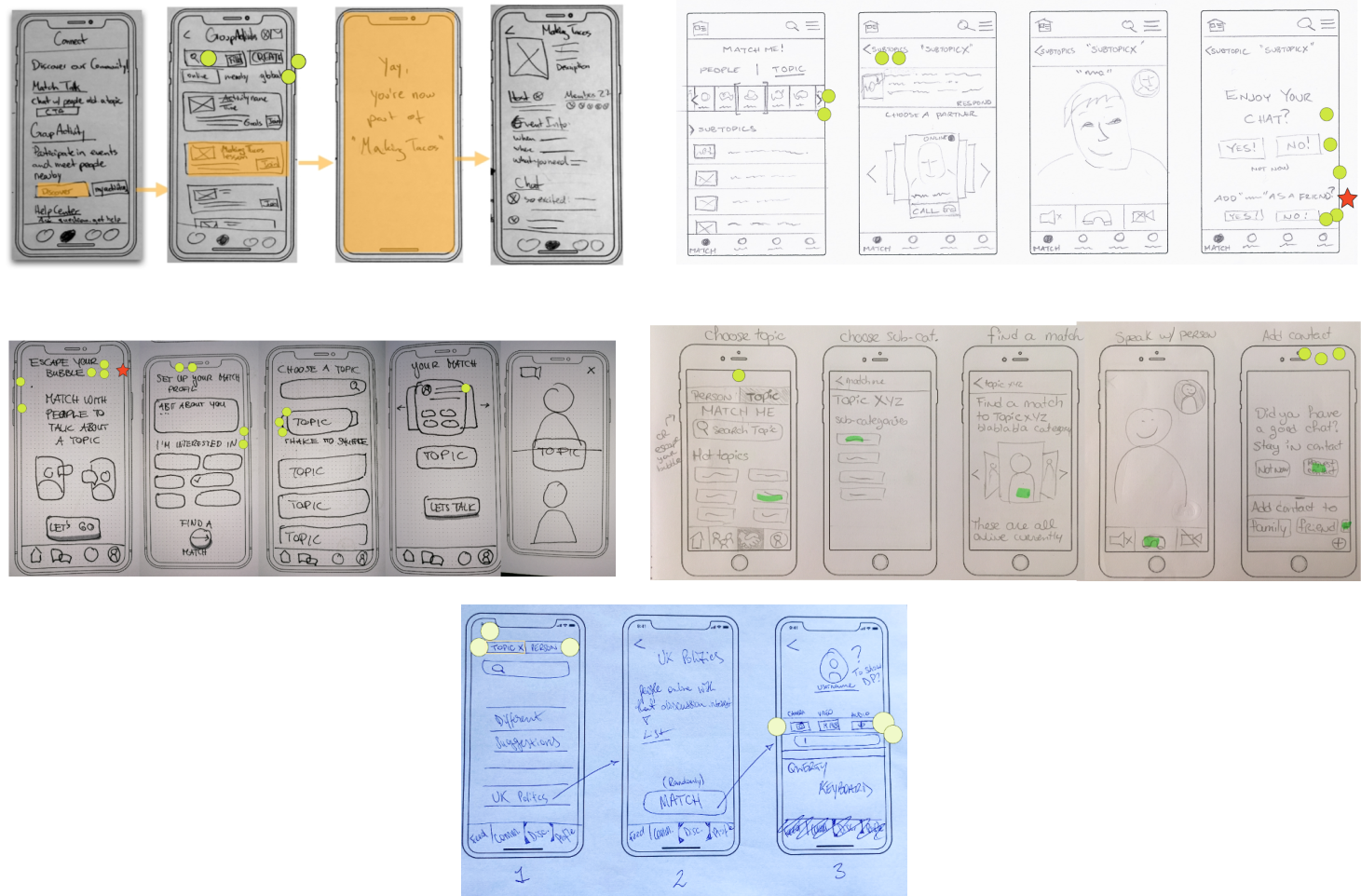
Getting a better picture of the features by sketching some wireflows was crucial to shape our future prototype. We concentrated on our previously voted features: Feed, Match & Community. We sketched some more, voted on our favorite screens and developed those ideas further.
SKETCHING WIREFLOWS
Getting a better picture of the features by sketching some wireflows was crucial to shape our future prototype. We concentrated on our previously voted features: Feed, Match & Community. We sketched some more, voted on our favorite screens and developed those ideas further.
FEED SCREEN IDEAS
FEED SCREEN IDEAS
COMMUNITY SCREEN IDEAS
COMMUNITY SCREEN IDEAS
MATCH SCREEN IDEAS
MATCH SCREEN IDEAS
RAPID PROTOTYPING
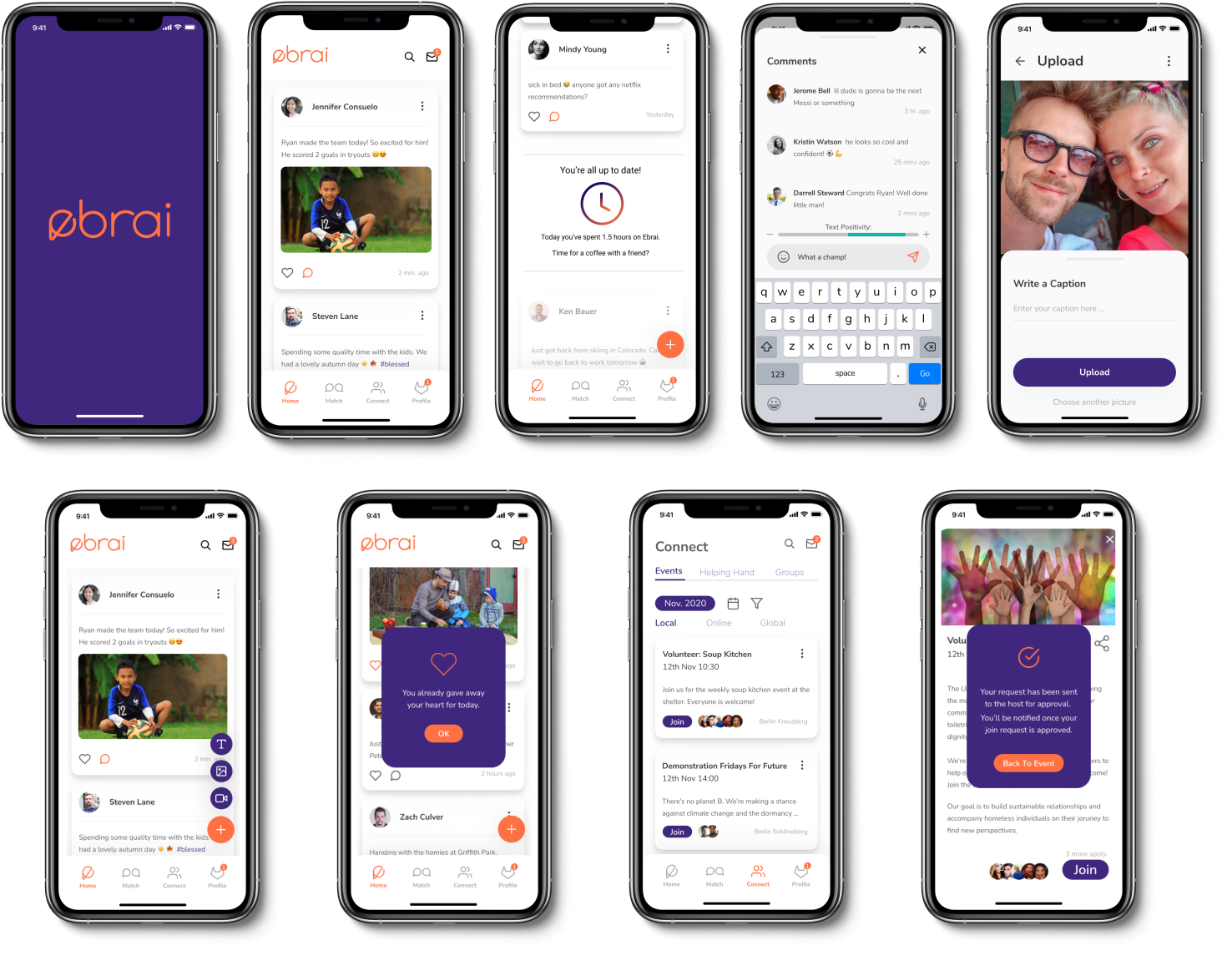
We each assigned ourselves a responsibility and in a few hours we had a clickable prototype.
RAPID PROTOTYPING
We each assigned ourselves a responsibility and in a few hours we had a clickable prototype.
We tested our first prototype with 8 users. Our participants had 4 tasks to accomplish: 1. comment on a friend’s post 2. Share a selfie of yours by posting it 3. Like a post of someone 4. Join the local “soup kitchen” event
Our prototype was generally well perceived, although most participants were very surprised by the 1 heart a day concept, were confused about the “text positivity” scale and didn’t know the difference between the navigation points “match” and “connect”.
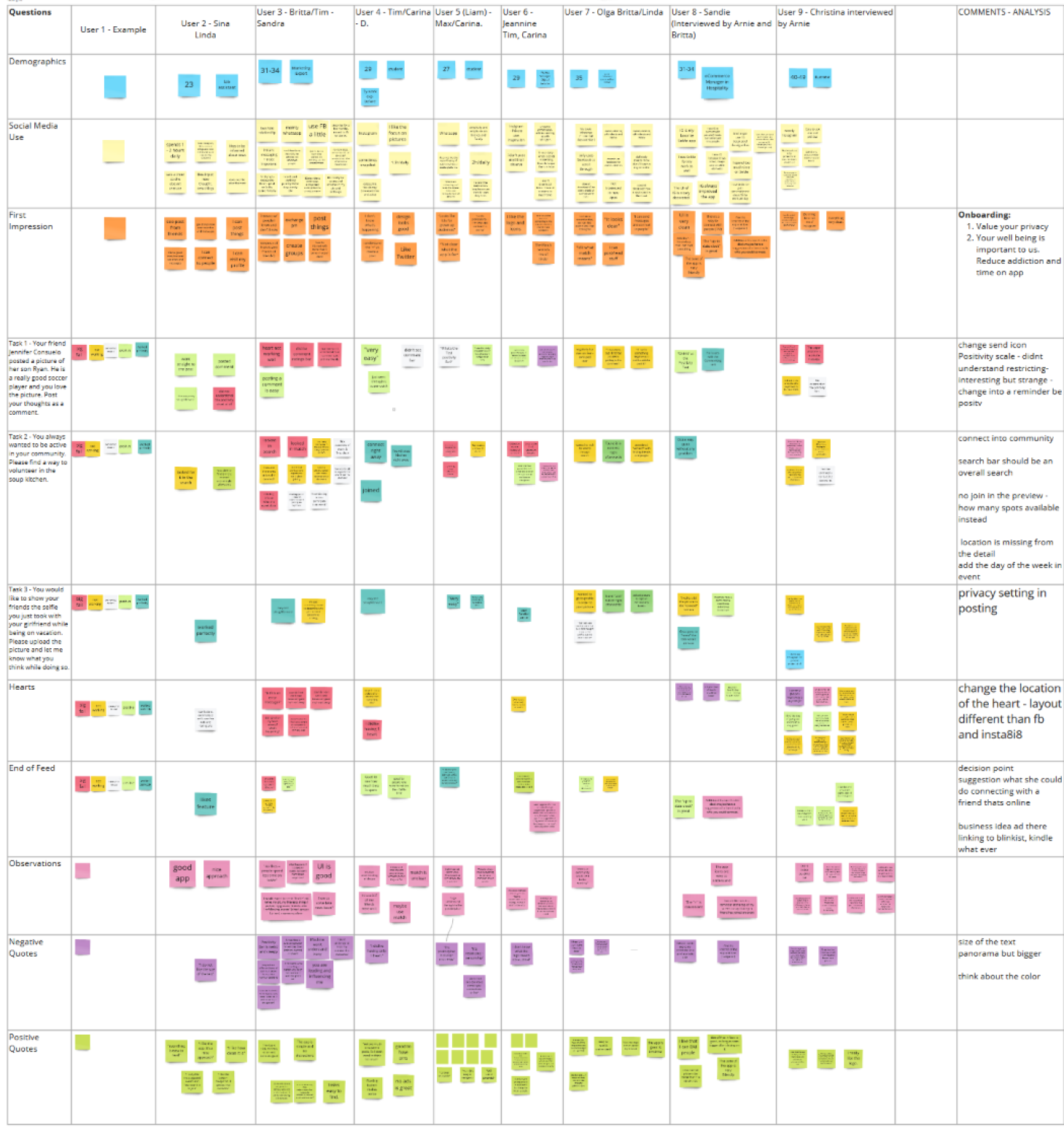
USER TESTING & ANALYSIS
We tested our first prototype with 8 users. Our participants had 4 tasks to accomplish: 1. comment on a friend’s post 2. Share a selfie of yours by posting it 3. Like a post of someone 4. Join the local “soup kitchen” event
Our prototype was generally well perceived, although most participants were very surprised by the 1 heart a day concept, were confused about the “text positivity” scale and didn’t know the difference between the navigation points “match” and “connect”.
ITERATION
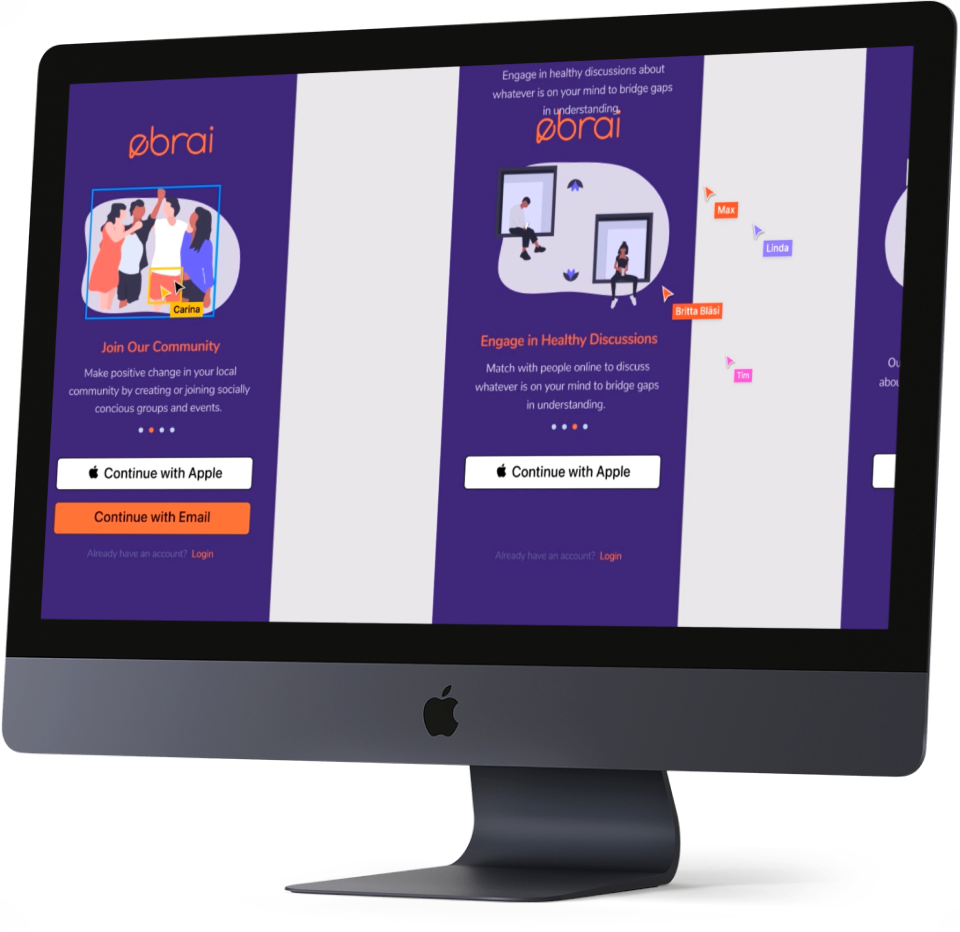
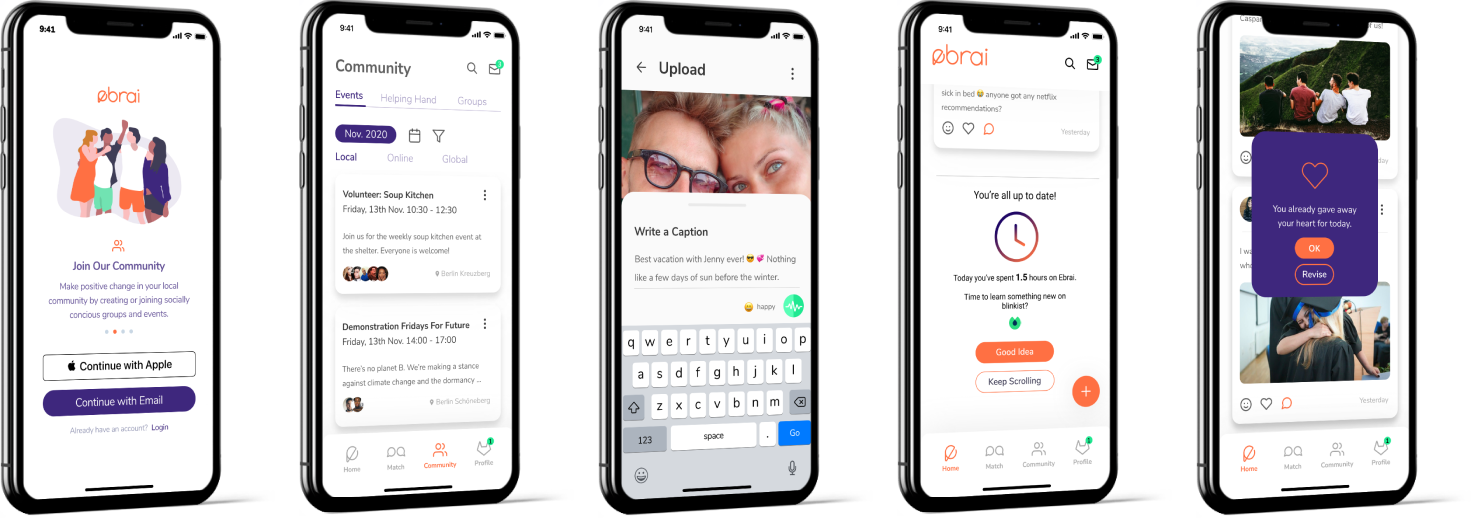
A lot of uncertainties were easy to solve, by simply adding a helpful and easy to understand onboarding, We found another way to show if a comment or post is positive or negative and changed the word “connect” to “community”. We also added a few other details.
ITERATION
A lot of uncertainties were easy to solve, by simply adding a helpful and easy to understand onboarding, We found another way to show if a comment or post is positive or negative and changed the word “connect” to “community”. We also added a few other details.
This experience was incredibly valuable. The time was very limited, and the goal wasn’t an easy one. We trusted the process, went along with it, and we were all surprised by the outcome we had generated. A 6-day Design Sprint is difficult to coordinated, especially with everyone’s busy schedule. If I did another sprint, it would be mandatory for each participant to be available the entire time. Our collaboration was phenomenal, but it would have been good to keep a better time boxing. We often got stuck in lengthy discussions, resulting in long days because the schedule wasn’t followed. I do believe that we achieved our goal, not by reinventing the entire social media world, but by implementing some features which remind people to go out, enjoy life, learn something new, have meaningful discussions, do good by joining a community event or commenting positively and not getting obsessed by the number of likes or comments.
Our next step is to create the “match” function. In order to do so, we would need to research, ideate interesting features, implement them into the prototype, run usability tests with participants and iterate as needed along the different phases.
LEARNINGS &
NEXT STEPS
This experience was incredibly valuable. The time was very limited, and the goal wasn’t an easy one. We trusted the process, went along with it, and we were all surprised by the outcome we had generated. A 6-day Design Sprint is difficult to coordinated, especially with everyone’s busy schedule. If I did another sprint, it would be mandatory for each participant to be available the entire time. Our collaboration was phenomenal, but it would have been good to keep a better time boxing. We often got stuck in lengthy discussions, resulting in long days because the schedule wasn’t followed. I do believe that we achieved our goal, not by reinventing the entire social media world, but by implementing some features which remind people to go out, enjoy life, learn something new, have meaningful discussions, do good by joining a community event or commenting positively and not getting obsessed by the number of likes or comments.
Our next step is to create the “match” function. In order to do so, we would need to research, ideate interesting features, implement them into the prototype, run usability tests with participants and iterate as needed along the different phases.